FlowBoard — Viral Open Source Project
timeline: November 2025 • team: James Li, Daniel Pu, Ferdinand Zhang
tech stack: TypeScript, React, Vite, Python, Google Cloud Platform, Redis, IndexedDB, Gemini, TlDraw, Tailwind CSS
Overview
Traditional animation is slow. Animators need to draw frame by frame and refine motion by hand. What if instead... you could simplify this process and create high quality animations in seconds?
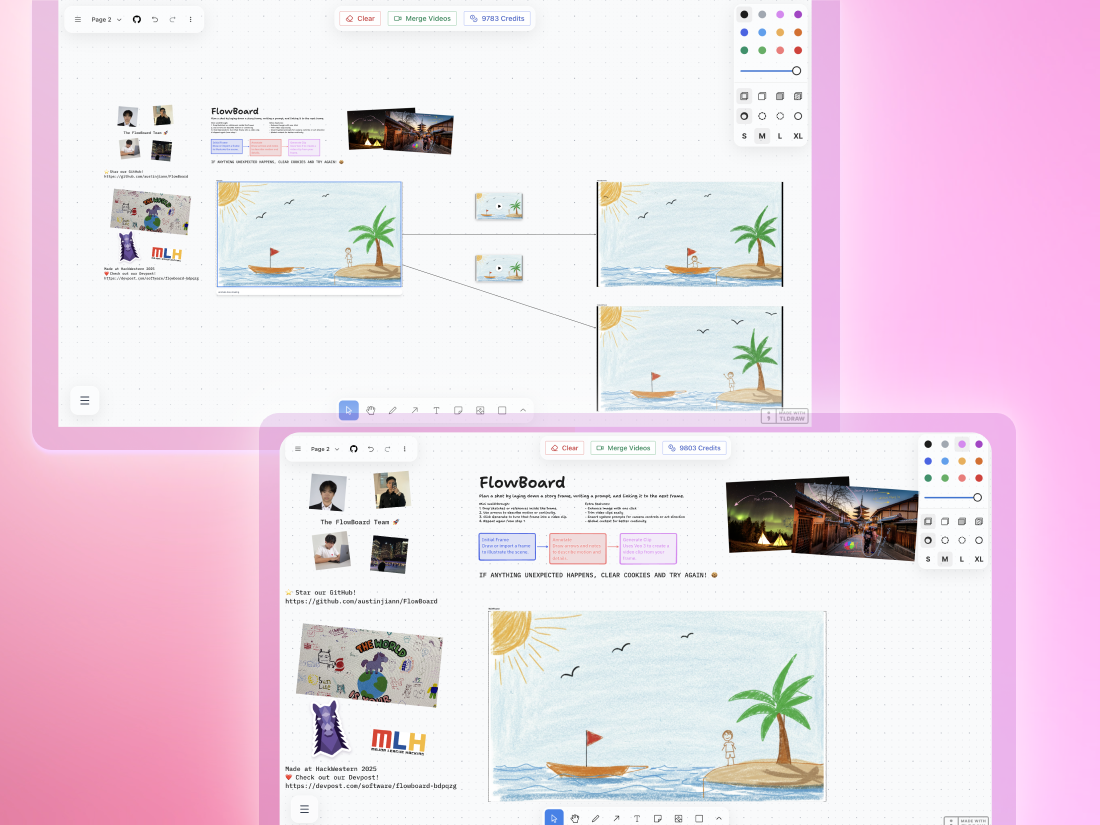
That's what FlowBoard does. You can now turn rough sketches into full animations in just two clicks.
In a nutshell, here's the workflow:
Sketch → Polish Button → Generate Button → Repeat forever
Inspiration
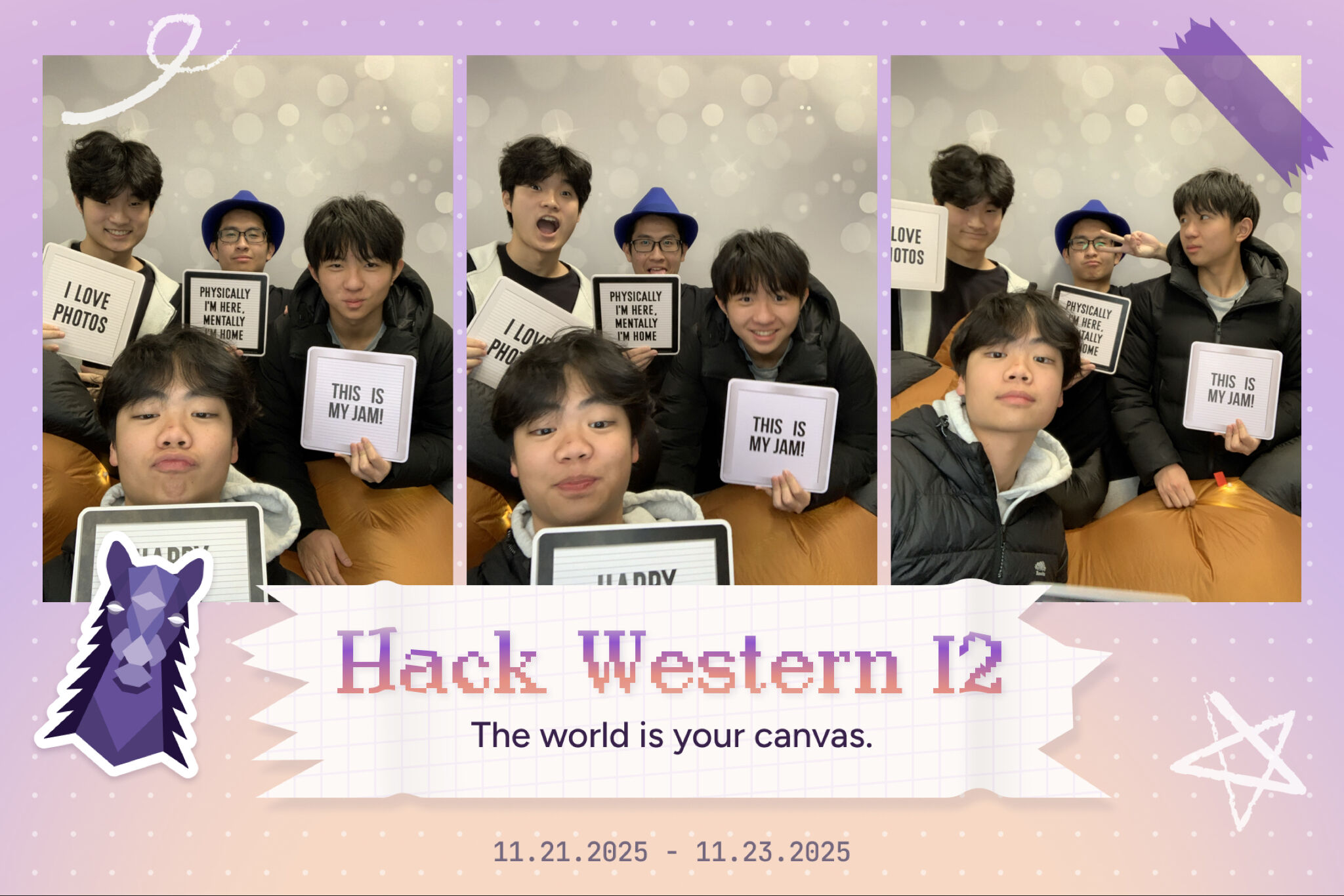
My team, Daniel, James, Ferdinand, and I were brainstorming ideas for Hack Western, and this was when Gemini 3 and Nano Banana 2 just got released.
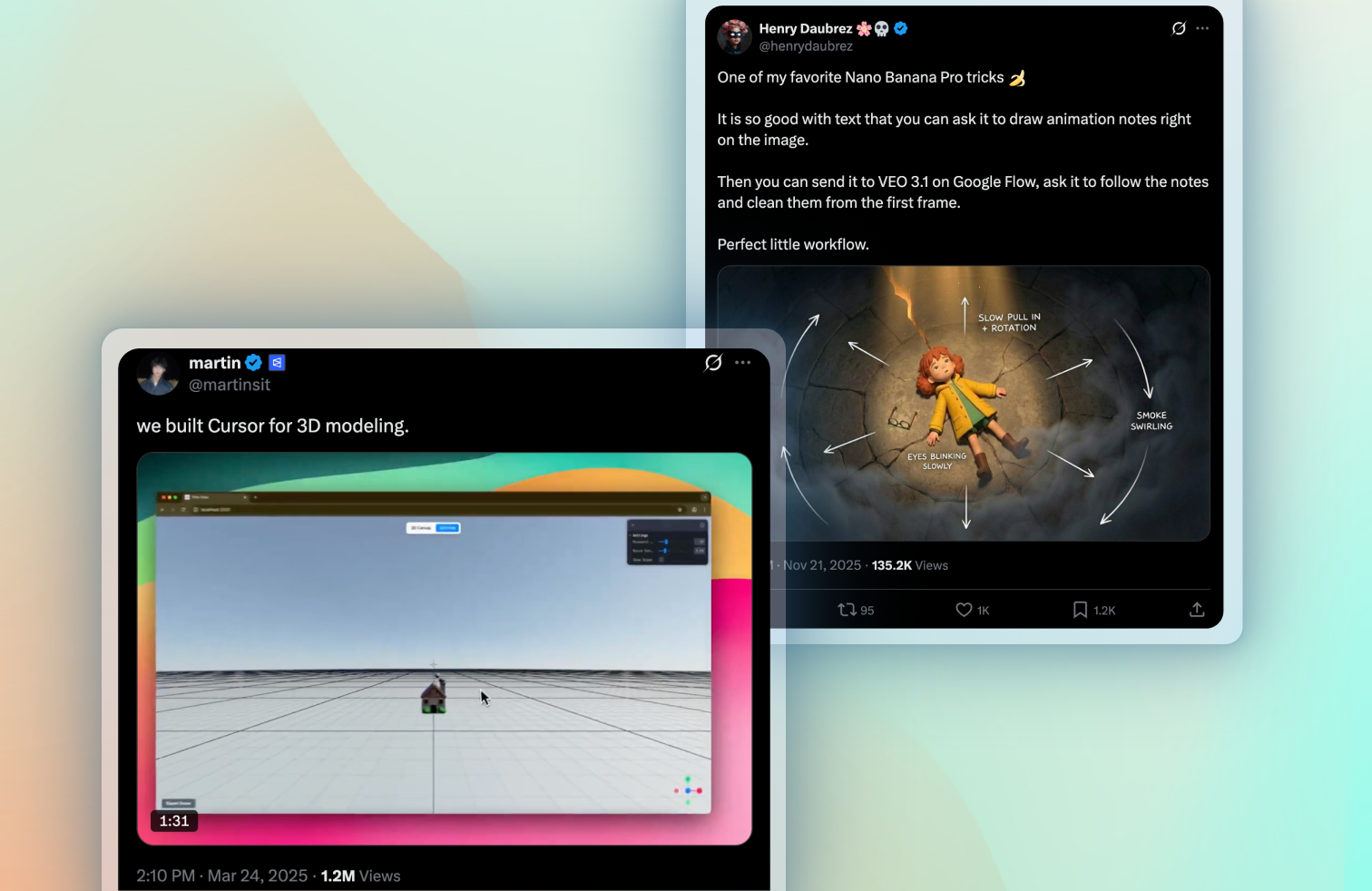
On Twitter, we stumbled across a few tweets, and realized that Nano Banana 2 is very powerful, especially when used with VEO because it can translate image annotations formed from NanoBanana to create accurate videos.
So we decided to turn this into a full project, where users can annotate on images or sketch their own to create animations of infinite length. The concept of the project is quite similar to Vibe Draw, so we took a lot of inspiration from them.
Instead of sketch → polish → generate 3d model → create a 3d world,
FlowBoard was sketch → polish → generate video → create full animation
How it works technically
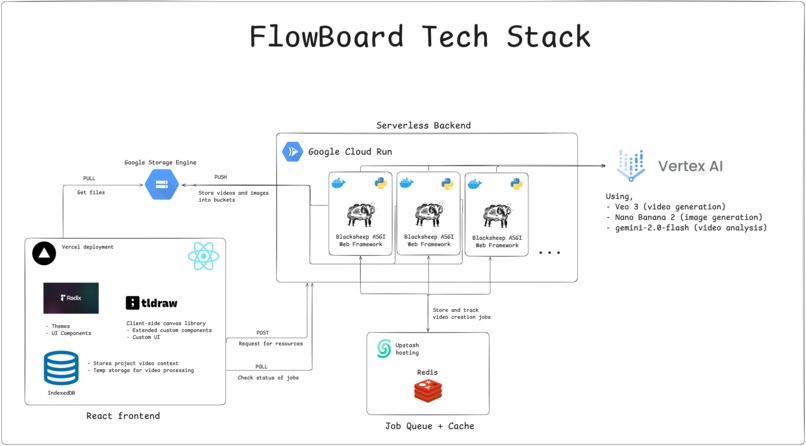
FlowBoard is split into a React (Vite) frontend and a Python backend that talks to Vertex AI (Veo for video gen, Nano Banana for image enhancement, and gemini-2.0 flash for video analysis).
On the frontend, the drawing canvas is built with the tldraw library. Your shapes are saved automatically in IndexedDB, so sketches persist across refreshes. After you draw, there is a polish button, powered by Nano Banana, that turns rough strokes into a cleaner starting frame by smoothing lines, cleaning up the sketch, adding colour, and producing a more consistent image for generation.
When you hit Generate, the frontend sends the prompt and polished frame to the backend. The backend starts an async job (POST /video) and triggers Veo to generate a short clip, writing results to a Google Cloud Storage bucket. The frontend then polls (GET /video/\{jobId\}) until it is done and returns a videoURL you can play. A new canvas is created, where the base is the video's last frame, so that you can sketch on it again, and extend the previous video into longer animations.
Results
And the results? We're really proud with how FlowBoard turned out :). It's super functional!
At the time of writing this, we've achieved over 1000 users, 100k+ views (twitter & linkedin), and 100+ stars on GitHub (pls go star us 🙏).
We also won second place at Hack Western and won Ninja Creamis so we can make our own ice cream and eat ice cream everyday.
To Ferdinand, Daniel, and James, thank you for being a goated team, I genuinely learned a lot from you guys, and it was really fun building with y'all 🫡!